
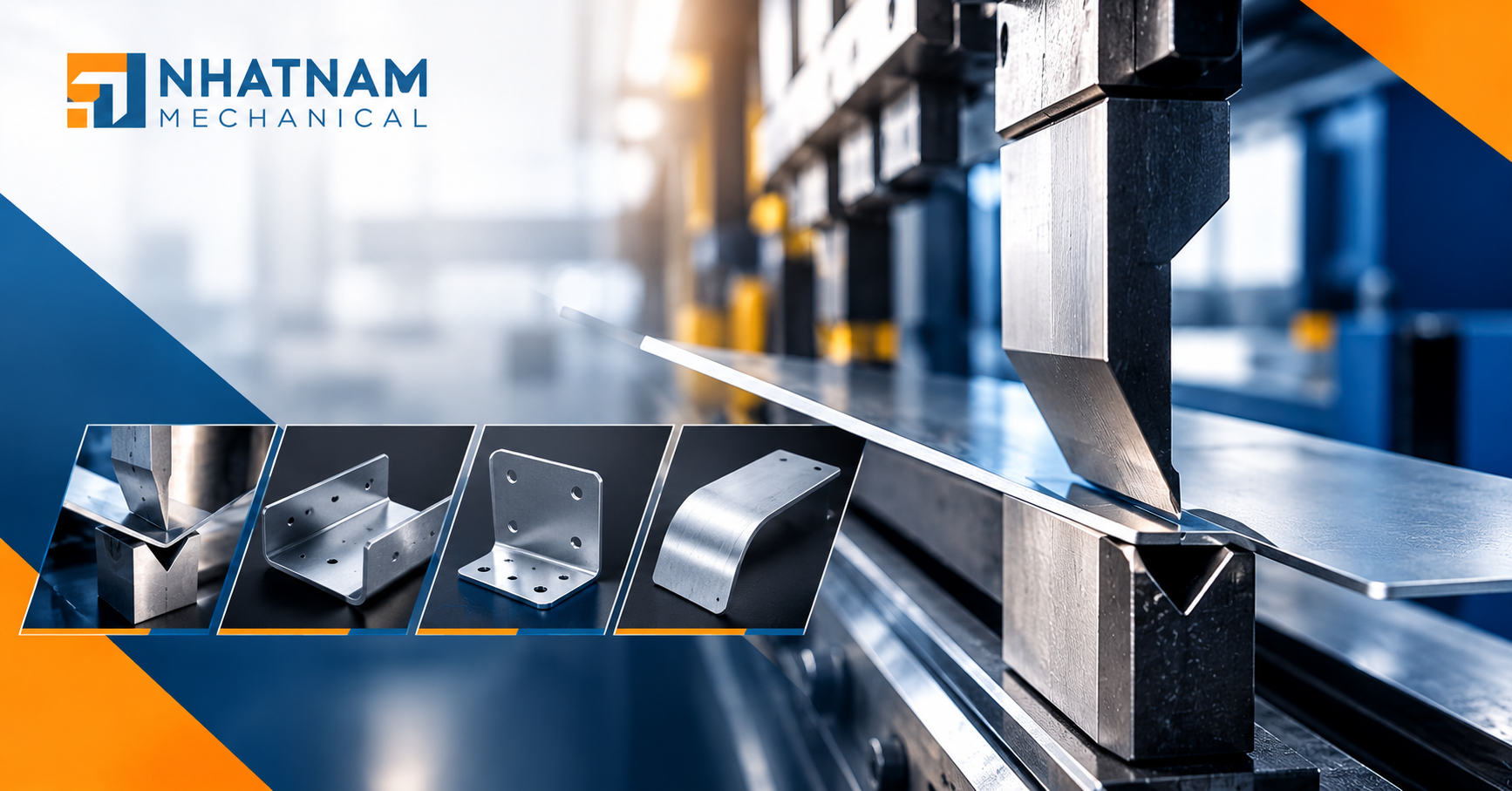
In the intricate world of modern manufacturing, precision and reliability are paramount. Sheet metal bending stands as a foundational process, transforming flat metal sheets into complex, three-dimensional components essential for a vast array of industries. From robust industrial equipment to intricate consumer electronics, the quality of a bend directly impacts product functionality, aesthetics, and structural integrity. For OEM and ODM partners, understanding the nuances of various bending methods is crucial for informed design and manufacturing decisions.
At Nhat Nam Sheet Metal, with over 10 years of specialized experience in Vietnam, we don’t just bend metal; we engineer solutions. Our expertise encompasses a comprehensive understanding of each bending technique, ensuring that your custom components are produced with unmatched accuracy and consistency. This article delves into the critical differences between common sheet metal bending methods, guiding you through their applications, advantages, and considerations, and illustrating how Nhat Nam Sheet Metal serves as your strategic partner for superior OEM/ODM fabrication.
Nhat Nam Sheet Metal: Over a Decade of Precision Bending Expertise
For over a decade, Nhat Nam Sheet Metal has been at the forefront of precision metal fabrication in Vietnam. Our commitment to excellence is deeply embedded in every process, especially in sheet metal bending. We recognize that bending is not merely about shaping metal; it’s about achieving exact tolerances, maintaining material integrity, and ensuring the final product meets the most stringent specifications.
Our state-of-the-art facility is equipped with advanced CNC press brakes and a diverse inventory of tooling, allowing us to execute a wide range of bending operations with superior accuracy. Our highly skilled fabricators possess extensive knowledge in metallurgy and advanced bending techniques, capable of working with various materials including stainless steel, aluminum, carbon steel, and galvanized steel. This technical prowess, combined with our ISO 9001:2015 certification, assures our clients of consistent quality control and adherence to international manufacturing standards throughout every project. We invite you to explore our capabilities and see our commitment to quality firsthand by taking a Nhat Nam factory tour.
Understanding the Fundamentals of Sheet Metal Bending
Sheet metal bending is a forming process that plastically deforms a flat piece of sheet metal into an angular shape. This deformation occurs along a straight line, known as the bend line, typically performed using a press brake. The basic principle involves clamping the sheet metal between a punch and a die, forcing it to bend to a desired angle. Several critical factors influence the bending process, including the material’s thickness, type, and tensile strength, as well as the bend radius, bend angle, and tooling geometry. Achieving optimal results requires a meticulous consideration of these variables, often aided by sophisticated software and expert calculation to compensate for material springback and other phenomena.
A Detailed Comparison of Sheet Metal Bending Methods
The choice of bending method significantly impacts the precision, cost, and efficiency of your sheet metal components. Each technique offers distinct advantages, making the selection process critical for OEM and ODM projects. Nhat Nam Sheet Metal excels in implementing these diverse methods, guided by a deep understanding of their application and limitations.
Air Bending
Air bending is arguably the most common and versatile bending method. In this process, the punch pushes the sheet metal into the V-die, but the metal does not fully contact the bottom of the die. Instead, the bend is formed by controlling the penetration depth of the punch. The material is supported by the edges of the die, and the angle is determined by how deep the punch descends.
- Advantages: High flexibility for producing various angles with minimal tooling changes, low tonnage requirements, reduced tooling costs, suitable for prototyping and low-volume production.
- Disadvantages: Less precise on bend angle than bottoming or coining, requires careful calibration for springback compensation, potential for slight variations across a batch.
- Applications: Widely used for parts requiring a range of angles, large workpieces, and where tooling costs need to be minimized.
Bottoming
Bottoming involves pressing the sheet metal down firmly into the die, ensuring full contact with both the punch and the die. The angle of the punch and die typically matches the desired bend angle, and the material is forced to conform precisely to the tooling geometry.
- Advantages: High accuracy and repeatability for bend angles, consistent inside radius, reduced springback due to complete material forming, suitable for high-volume production.
- Disadvantages: Requires specific tooling for each bend angle, higher tonnage than air bending, increased tooling costs.
- Applications: Ideal for applications requiring extremely precise and consistent bend angles, such as critical structural components or aesthetic parts where visual uniformity is key.
Coining
Coining is an extreme form of bottoming where the punch forcefully indents the metal, exceeding its tensile strength and causing the material to thin at the bend line. This process eliminates springback almost entirely by permanently deforming the material.
- Advantages: Superior angular accuracy, minimal to zero springback, highly repeatable bends, extremely sharp inside radii possible.
- Disadvantages: Requires very high tonnage, causes material thinning, puts significant stress on tooling, high tooling costs due to precision requirements.
- Applications: Used for very small, high-precision parts where tight tolerances and sharp bends are crucial, often in electronics or medical devices.
Wiping or Edge Bending
In wiping, the sheet metal is clamped firmly, and a wiping die or blade sweeps down to bend the free edge of the material around a radius. This method is often used for creating flanges or U-bends.
- Advantages: Good for long, narrow flanges, often used with specialized machinery for continuous bending, can be highly automated.
- Disadvantages: Limited to specific geometries, potential for material stretching or tearing if not properly controlled, requires custom tooling for different radii.
- Applications: Creating hems, flanges, and profiles with a constant bend radius along a long edge, common in enclosures and ductwork.
Roll Bending
Roll bending uses a series of rollers to form large radius curves and cylindrical or conical shapes. The sheet metal passes through three or four rollers, which gradually deform it into the desired curvature without forming distinct sharp bends.
- Advantages: Excellent for creating large radii and full cylinders or cones, smoother finish without stress concentrations associated with sharp bends, handles long sheets.
- Disadvantages: Not suitable for sharp angles, requires specialized roll bending machines, slower process for smaller parts.
- Applications: Tanks, pipes, pressure vessels, architectural elements, and components requiring smooth, continuous curves.
Folding
Folding involves clamping the sheet metal and then using a folding beam to swing up and create the bend. Unlike traditional press brakes where the punch moves, in folding, the material is typically held stationary while the folding tool manipulates the bend. This method is often performed on folding machines rather than press brakes.
- Advantages: Minimal marking on finished surfaces (especially important for pre-painted or polished sheets), high precision, capable of complex shapes with multiple bends, efficient for large parts.
- Disadvantages: Limited to certain material thicknesses and types, requires specialized folding machines, potentially higher initial equipment investment.
- Applications: Architectural panels, HVAC components, enclosures with high aesthetic requirements, and large-format sheet metal fabrication.
Selecting the optimal bending method requires a deep understanding of material properties, desired geometry, tolerance requirements, and production volume. At Nhat Nam Sheet Metal, our engineering team works closely with clients to analyze their project specifications and recommend the most effective and efficient bending strategy, ensuring both technical feasibility and cost-effectiveness.
The Nhat Nam Advantage: Our Precision Bending Process
Our systematic approach to sheet metal bending ensures precision from concept to completion. The Nhat Nam Sheet Metal process is meticulously designed to deliver consistent quality and meet stringent OEM/ODM requirements:
- Design Review and Optimization: Our engineers begin by reviewing your CAD data and blueprints. We provide design-for-manufacturability (DFM) feedback, optimizing designs for cost-effective bending while preserving functional integrity. This includes analyzing bend radii, k-factors, and potential springback.
- Material Selection: We assist in selecting the ideal material—be it stainless steel, aluminum, carbon steel, or galvanized steel—considering its properties and the specific demands of your application.
- Tooling and Setup: Based on the chosen bending method and material, we select or custom-fabricate appropriate punches and dies. Our advanced CNC press brakes are programmed for precise angle control, minimizing setup time and maximizing accuracy.
- Precision Bending Execution: Our skilled operators meticulously execute the bending process, continually monitoring for quality and consistency. We employ advanced sensors and feedback systems to compensate for material variations and achieve exact bend angles.
- In-Process Quality Control: Throughout the bending process, parts undergo rigorous inspection using precision measuring tools to verify dimensions and angles against design specifications.
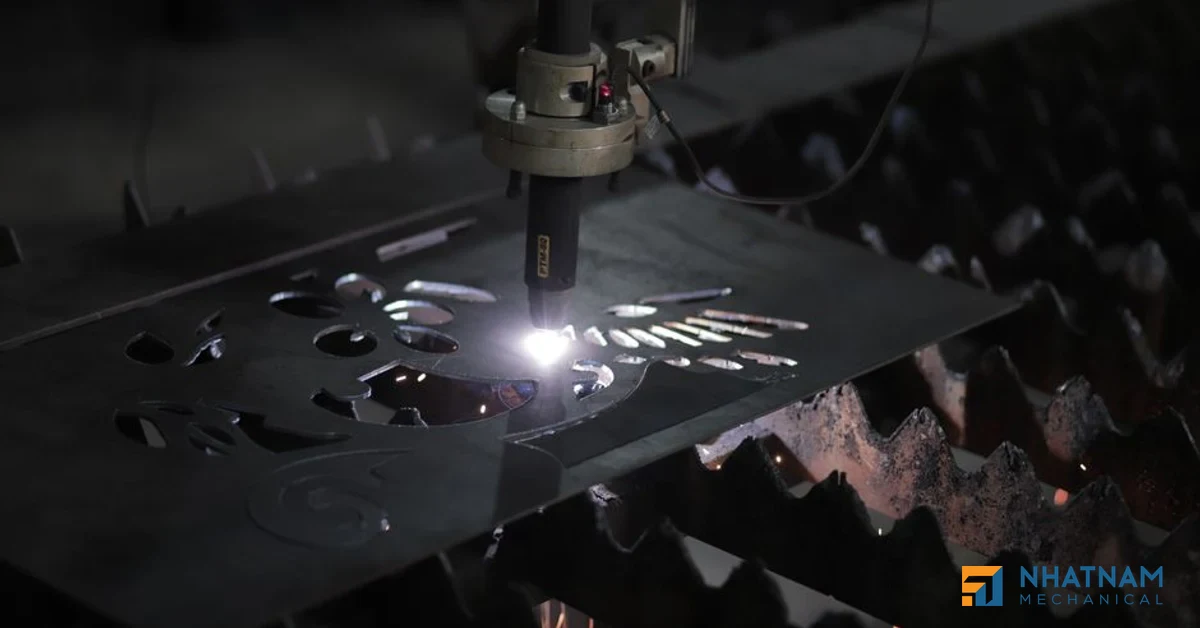
- Post-Bending Processes: Once bent, components may proceed to other Nhat Nam services such as metal laser cutting for further shaping, CNC machining services for intricate features, sheet metal punching or stamping for holes or forms, metal welding services for assembly, or metal finishing services for surface protection and aesthetics.
Comprehensive Services: Your One-Stop Fabrication Partner
While precision bending is a cornerstone of our operations, Nhat Nam Sheet Metal offers a holistic suite of fabrication services, making us a true one-stop solution for your OEM/ODM needs. Our integrated capabilities ensure seamless transitions between processes, reducing lead times and logistical complexities for our clients.
- Metal Laser Cutting: Advanced fiber laser technology for intricate designs and high precision.
- CNC Machining: For complex parts requiring tight tolerances and superior surface finishes.
- Sheet Metal Punching & Stamping: Efficient production of holes, forms, and blanking.
- Metal Welding Services: Expertise in various welding techniques (MIG, TIG, Spot Welding) for strong, reliable assemblies.
- Finishing Services: Comprehensive options including powder coating, plating, polishing, and sandblasting to enhance durability and appearance.
- Assembly & Quality Control: Full assembly services and stringent quality checks at every stage, culminating in final product inspection.
This comprehensive approach means you can rely on Nhat Nam Sheet Metal to manage your project from initial design through to final delivery, ensuring consistency, efficiency, and superior results.
Real-World Applications and OEM Project Successes
The versatility and precision of Nhat Nam Sheet Metal’s bending capabilities are demonstrated across a diverse range of OEM projects. We translate complex designs into functional, high-quality products for various industries.
- OEM Gun Safes: We fabricate robust and precisely bent components for secure storage solutions, meeting stringent safety and durability standards.
- OEM Horse Stables: Our work includes bending structural components for durable and safe equine housing, prioritizing strength and longevity.
- Material Handling Equipment: From frames for industrial carts to components for conveyor systems, our bending ensures the structural integrity and smooth operation of heavy-duty equipment. Our success with OEM Industrial Cart Frames exemplifies our capability in this sector.
- Architectural Elements: Precision-bent panels and structural components for modern building designs.
- Electronics Enclosures: Intricate bending for durable and aesthetically pleasing housings for sensitive electronic devices.
- Medical Equipment Components: Fabricating highly accurate parts for machinery where reliability is non-negotiable.
These examples underscore our ability to serve as a reliable OEM partner, delivering custom solutions that align perfectly with our clients’ strategic goals.
Why Choose Nhat Nam Sheet Metal as Your Strategic Partner?
Choosing the right manufacturing partner is critical for the success of your OEM/ODM projects. Nhat Nam Sheet Metal offers distinct advantages that position us as your premier choice in Vietnam:
- Unwavering Quality Assurance: Our ISO 9001:2015 certification is a testament to our rigorous quality management system, ensuring every product meets global standards.
- Efficiency and Cost-Effectiveness: Leveraging advanced technology and lean manufacturing principles, we deliver efficient production cycles and competitive factory pricing, without compromising on quality.
- Customization and Flexibility: We embrace complex designs and offer low MOQ options, providing unparalleled flexibility for your unique project requirements. Our capabilities are endless, from unique prototypes to high-volume production.
- One-Stop Solution: From design consultation and prototyping to comprehensive fabrication, finishing, assembly, and quality control, we manage the entire manufacturing lifecycle, streamlining your supply chain.
- Strategic Vietnam Location: Benefit from Vietnam’s growing manufacturing ecosystem, skilled workforce, and advantageous logistics for global distribution.
At Nhat Nam Sheet Metal, we are more than a supplier; we are an extension of your team, dedicated to delivering precision, reliability, and value.
Ready to Realize Your Vision?
Understanding the intricacies of sheet metal bending methods is just the first step. Partnering with a manufacturer that possesses the expertise, technology, and commitment to quality is what truly brings your designs to life. At Nhat Nam Sheet Metal, we combine advanced bending capabilities with a comprehensive suite of metal fabrication services to serve as your strategic partner in Vietnam.
Contact Nhat Nam Sheet Metal for advice tailored to your needs. Let us transform your designs into high-quality, precision-engineered components that drive your success.
Frequently Asked Questions
What types of materials can Nhat Nam Sheet Metal bend?
Nhat Nam Sheet Metal is equipped to bend a wide range of materials, including stainless steel, aluminum, carbon steel, and galvanized steel. Our expertise extends to selecting the optimal bending method and tooling for each material to achieve the desired precision and structural integrity.
Does Nhat Nam Sheet Metal offer low MOQ for bending projects?
Yes, Nhat Nam Sheet Metal understands the diverse needs of OEM/ODM clients, from prototyping to mass production. We offer flexible low Minimum Order Quantity (MOQ) options, making our precision bending services accessible for projects of all scales.
How does Nhat Nam ensure precision in sheet metal bending?
Precision is guaranteed through a combination of factors: our advanced CNC press brakes, extensive tooling inventory, highly skilled and experienced fabricators, and stringent in-process quality control measures. We also perform design-for-manufacturability (DFM) reviews to optimize designs for precision and efficiency.
Can Nhat Nam Sheet Metal handle complex bend designs?
Absolutely. Our engineers and fabricators specialize in tackling complex geometries and intricate bend designs. We leverage sophisticated software for bend calculations and have the technical acumen to advise on the best bending method and tooling to achieve your specific design requirements.
What other services does Nhat Nam Sheet Metal offer besides bending?
As a comprehensive one-stop fabrication partner, Nhat Nam Sheet Metal offers a full suite of services beyond bending, including metal laser cutting, CNC machining, sheet metal punching, sheet metal stamping, various metal welding services, finishing services (e.g., powder coating, plating), and full assembly with rigorous quality control.