
During the laser cutting of sheet metal, cut quality is not judged solely by dimensional and geometric accuracy. The presence of burrs along the cut edge is also a critical factor, particularly for parts that require subsequent welding, assembly, or surface finishing.
Excessive burrs can increase post-cutting processing time, compromise assembly accuracy, and affect the overall surface quality of the product. Therefore, controlling burr formation during the laser cutting stage is an important part of the sheet metal fabrication process.
1. What Are Burrs After Laser Cutting?
Burrs are excess metal residue that remains attached to the edge or underside of a part after laser cutting. During the cutting process, the laser beam melts the material, while assist gas helps expel the molten metal from the kerf (the cut gap). If this process is not properly controlled, some molten metal may solidify and adhere to the part’s edge, forming a burr.
The severity of burr formation depends on various factors, including material type, sheet thickness, laser power, cutting speed, focal position, assist gas, and the condition of the cutting head.
Therefore, when burrs appear, it is important not to adjust a single parameter in isolation. Instead, the entire cutting process should be evaluated to identify the root cause.
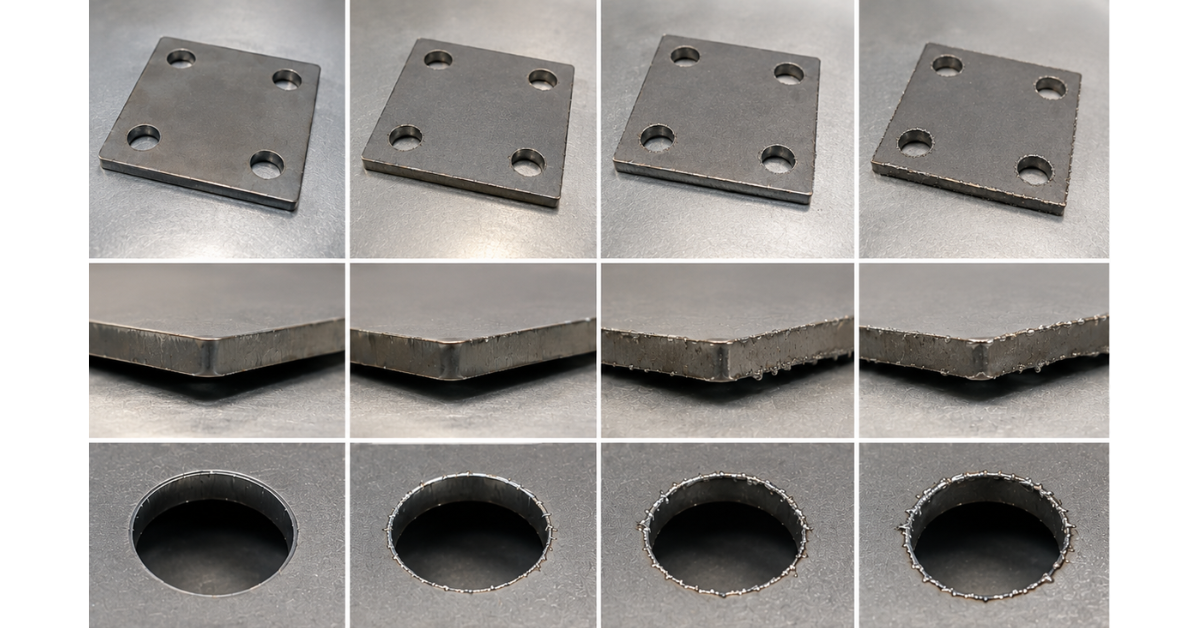
2. Main Causes of Burrs During Laser Cutting
Inappropriate Cutting Parameters
Cutting speed and laser power directly influence the amount of heat transferred to the material.
If the cutting speed is too high, the laser energy may be insufficient to maintain a stable cutting process throughout the thickness of the sheet. Conversely, if the speed is too low, excessive heat may build up in the material, generating a larger amount of molten metal and increasing the likelihood of burr formation.
Laser power must also be selected according to the specific material type and thickness. Therefore, using a fixed set of parameters for all types of sheet metal is not recommended.
Incorrect Focal Position
The laser focal point determines how energy is concentrated within the cutting zone. If the focus is not set correctly, the energy may not be distributed efficiently throughout the material thickness.
As a result, molten metal may not be fully expelled from the kerf, resulting in rough cut edges or burr formation.
Inappropriate Assist Gas
Assist gas helps expel molten metal from the cutting zone and maintain cut quality.
Depending on the material and product requirements, nitrogen (N₂), oxygen (O₂), or compressed air may be used. The choice of gas, along with the appropriate pressure and flow rate, can significantly affect cut edge quality.
For instance, nitrogen is often used when minimizing oxidation and achieving a cleaner cut surface are important. Oxygen, on the other hand, may be suitable for cutting carbon steel because it supports the cutting process.
Equipment and Cutting Head Condition
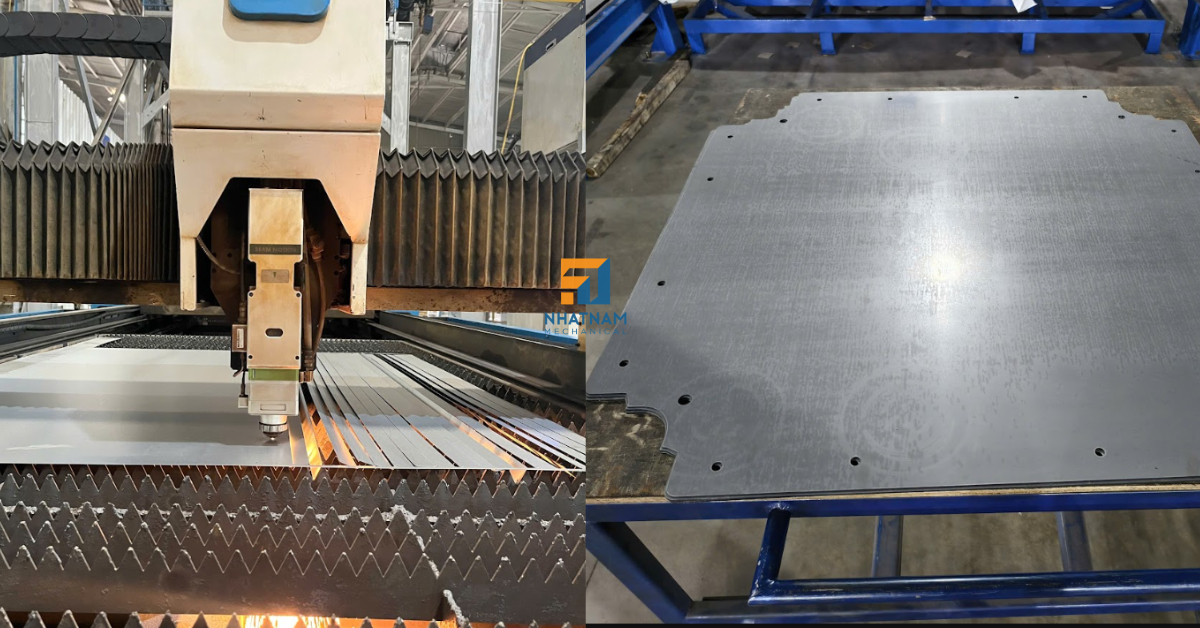
A deformed nozzle, contaminated protective lens, or unstable gas supply can all affect cutting results.
A damaged or misaligned nozzle can prevent the assist gas from being properly directed into the cutting zone, reducing the efficiency of molten metal removal and increasing burr formation.
Material Quality
Two metal sheets made from the same material and with the same thickness can still produce different cutting results due to variations in surface quality, flatness, or material properties.
In mass production, using a consistent material source helps manufacturers maintain stable cutting parameters and achieve more uniform product quality.
3. How to Reduce Burrs During Laser Cutting?
Optimize Cutting Parameters for Specific Materials
There is no single set of parameters suitable for every material and thickness. Parameters such as laser power, cutting speed, and focal position should be configured according to the specific material and sheet thickness.
In production, manufacturers should establish standard cutting parameters for each material group and then verify and fine-tune them based on actual cutting results.
Standardizing parameters not only helps reduce burr formation but also ensures a more stable cutting process when switching between different production orders.
Control Assist Gas
In addition to selecting the appropriate gas type, gas pressure and flow rate must also be properly controlled.
If the pressure is insufficient, molten metal may not be completely expelled from the kerf. Unstable gas pressure or flow can also cause variations in cut edge quality during production.
Therefore, the gas supply system should be inspected regularly to ensure that pressure and flow rates remain within the machine’s required range.
Inspect and Maintain the Cutting Head
The cutting head and related components require periodic inspection, especially when there is a noticeable change in cut quality.
Key components to monitor include:
- Nozzle
- Protective lens
- Optical system
- Nozzle alignment and concentricity
- Assist gas supply system
Timely cleaning and replacement of consumable components help maintain consistent cut quality and minimize the gradual increase of burr formation during production.
Control Incoming Material Quality
Materials with inconsistent surface conditions, warping, excessive oxidation, or contamination can affect cutting results.
Therefore, inspecting sheet metal before production is a simple but effective way to identify potential problems early and reduce issues during the machining process.
4. Part Design Also Affects Burr Formation
Not all burr-related issues stem from the cutting machine itself. Product design also influences manufacturability and cutting stability.
Parts featuring numerous small holes, narrow slots, or complex profiles may require different cutting parameters compared with parts with simpler geometries.
When designing products for sheet metal fabrication, engineers should consider:
- Hole size and location
- Spacing between holes and edges
- Slot dimensions and small features
- Cut edge quality requirements
- Subsequent processing steps
A design that is aligned with the capabilities of the cutting machine can help ensure a more stable cutting process and minimize the need for post-cut deburring.
This is a key aspect of Design for Manufacturing (DFM), where product design is evaluated from the outset based on actual manufacturing capabilities.
5. When Is Post-Cutting Processing Required?
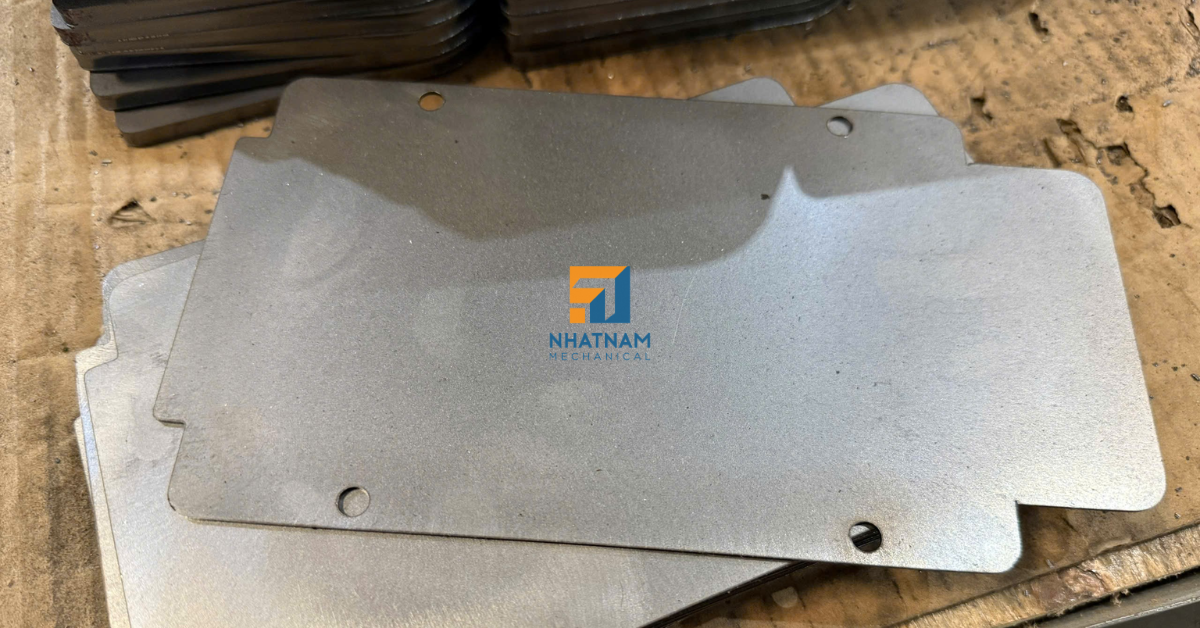
The goal of laser cutting is not necessarily to eliminate every trace of burrs. What matters is that the level of burr formation meets the product specifications and the requirements of subsequent processing stages.
For some parts, the cut edge can be used directly if it meets the required technical specifications. However, products requiring high safety standards, specific aesthetic requirements, or further processing may require additional treatment.
Common methods include:
- Deburring: Mechanical removal of burrs.
- Edge grinding: Suitable for areas requiring smoother or rounded edges.
- Sanding: Often used to improve surface finish and edge appearance.
- Cleaning: Removing metal dust and residual material before painting or surface treatment.
Optimizing cut quality during the laser cutting stage is generally more efficient than relying entirely on post-cutting processing. However, depending on specific product requirements, combining both approaches may provide the most suitable results.
6. Burr Control in Mass Production
In mass production, even a small amount of burr on each part can become a significant issue when accumulated across thousands of components.
Therefore, manufacturers should inspect cut quality throughout the production process rather than relying solely on final product inspection.
Inspections should be performed whenever there are significant changes, such as:
- Changing the material type or thickness
- Switching material batches
- Adjusting machine parameters
- Replacing the nozzle or protective lens
- Performing maintenance on the laser system
If an abnormal increase in burr formation is detected, technicians can recheck the cutting parameters, assist gas, focal position, and condition of the cutting head before continuing with mass production.
Establishing cut-edge quality standards for specific product groups also makes it easier for production teams to determine when machine adjustments or additional processing steps are required.
Conclusion
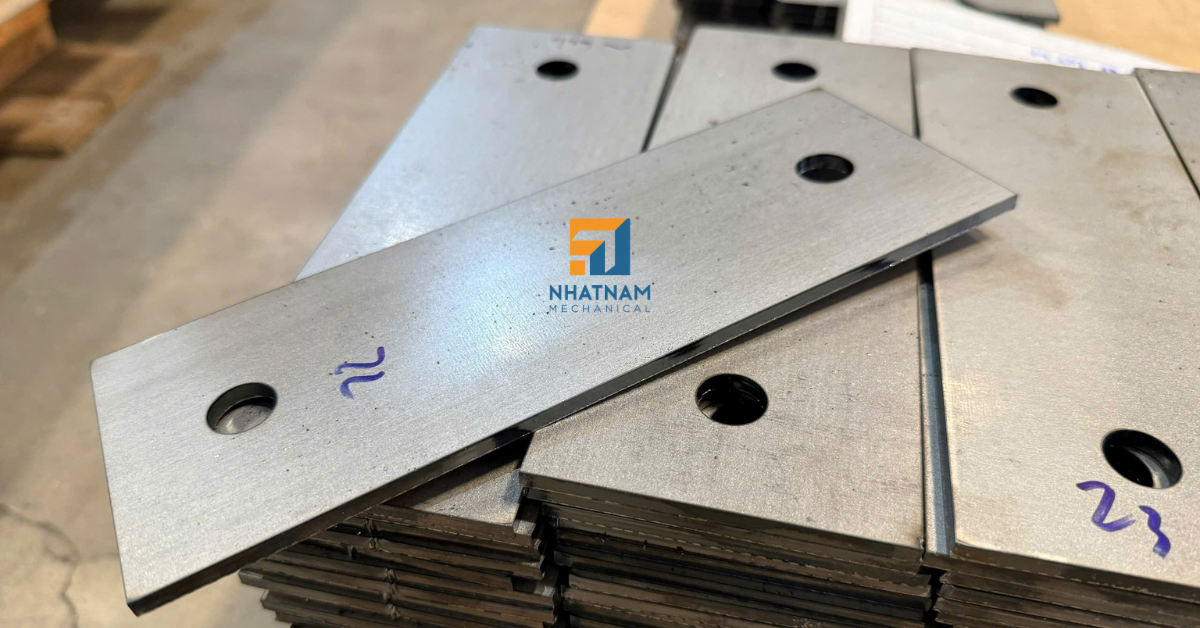
Burr formation during sheet metal laser cutting can be controlled through a combination of factors. Optimizing cutting parameters, selecting the appropriate assist gas, maintaining the cutting head, controlling material quality, and designing products with manufacturability in mind all play crucial roles in achieving clean and consistent cut edges.
Especially in mass production, standardizing cutting parameters for each material type and thickness, combined with in-process inspections, helps maintain consistent cut-edge quality and reduce post-cutting processing time.
These practices also contribute to improving the overall efficiency of the sheet metal fabrication process, from laser cutting to welding, assembly, and final product finishing.
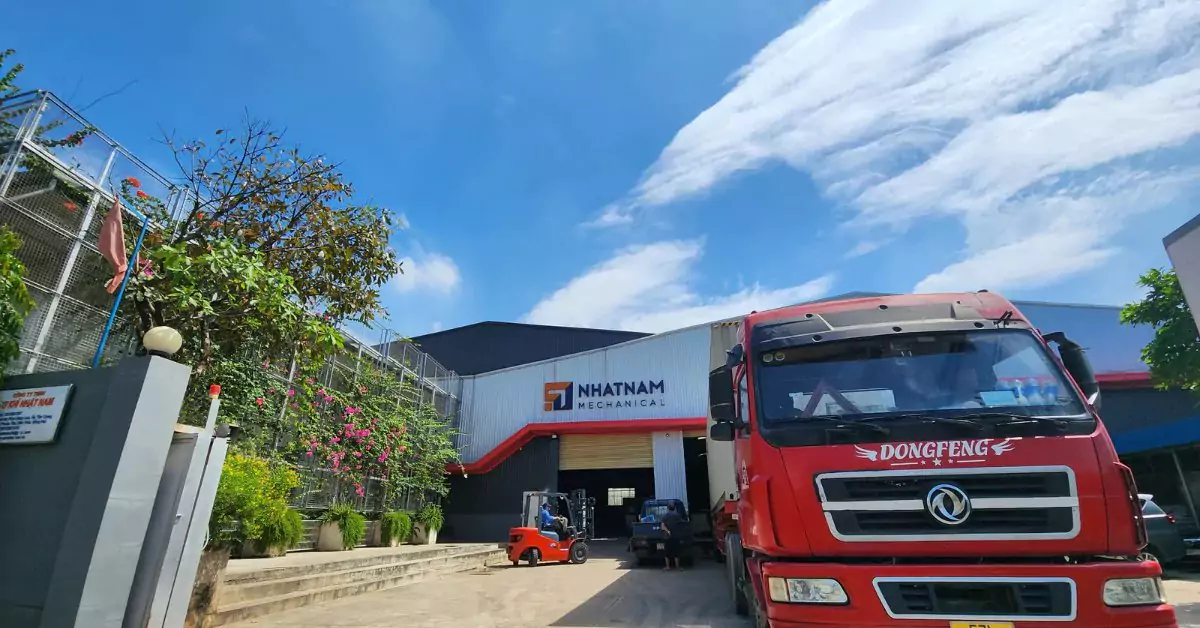
About Nhat Nam Mechanical
At Nhat Nam Mechanical, burr control extends beyond the post-cutting processing stage. We continuously invest in machinery, refine processing parameters, and improve our production methods to minimize burr formation from the laser cutting stage itself.
Depending on the material, thickness, and specific product requirements, Nhat Nam selects appropriate cutting methods and parameters while carefully controlling assist gas, cutting head condition, and other factors that affect cut quality. For high-precision products, this upfront optimization significantly reduces the need for post-cut deburring, saves production time, and improves product consistency.
This approach aligns with Nhat Nam’s sheet metal fabrication strategy: rather than focusing solely on individual machine capabilities, we optimize the entire manufacturing process—from laser cutting and bending to welding, surface treatment, and assembly—to deliver consistent product quality and greater production efficiency.